
The construction and structural engineering industry is rapidly advancing with digital tools that improve accuracy and efficiency. Among the most popular tools used for structural design and modeling are Tekla Structures and Revit Structure. Many students and professionals often find themselves confused when deciding between these two options. This is why understanding Tekla vs Revit Structure becomes essential for making the right career choice.
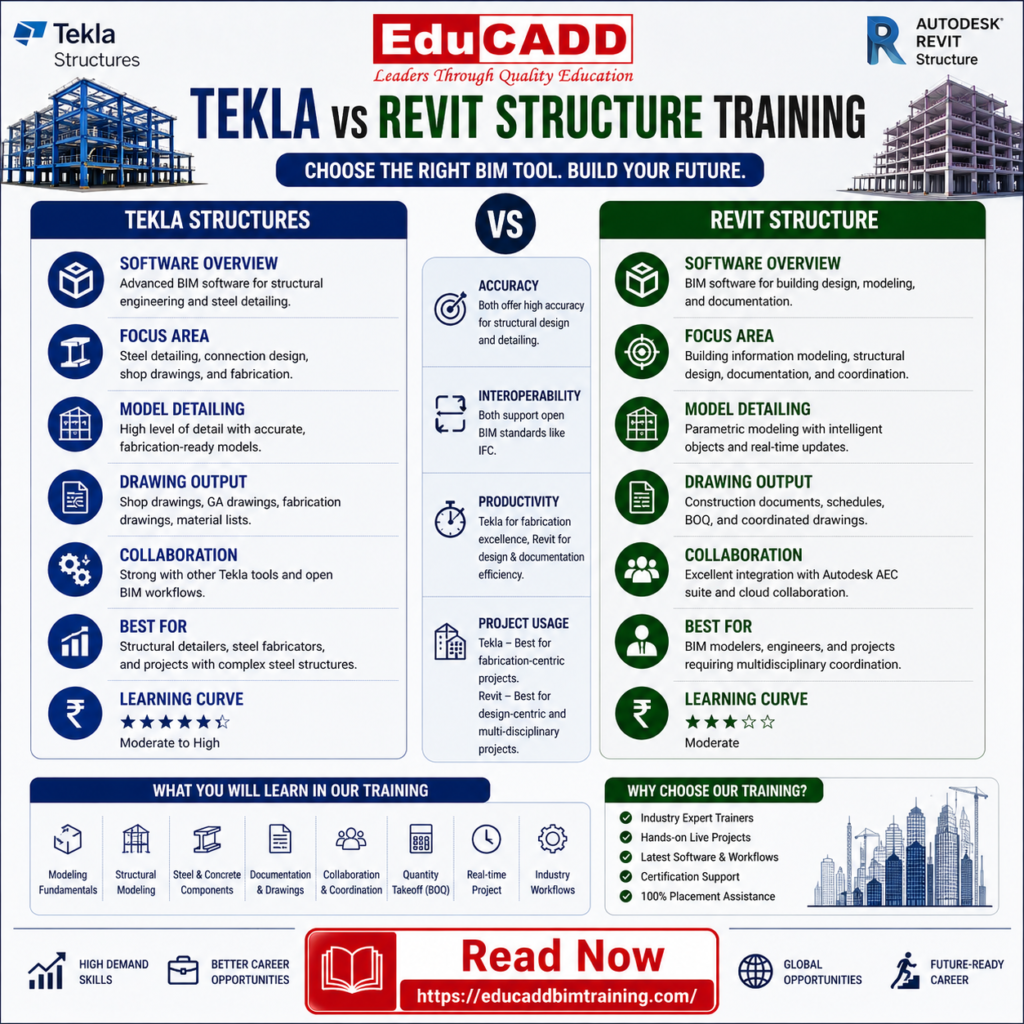
Both Tekla and Revit Structure are powerful tools, but they serve slightly different purposes in the structural engineering domain. While Tekla focuses on detailed structural modeling and fabrication, Revit Structure emphasizes design integration and collaboration. Choosing the right training depends on your career goals, project requirements, and industry demand. In this blog, we will explore Tekla vs Revit Structure in detail to help you make an informed decision.
1. Understanding Tekla Structures Training
Tekla Structures is a specialized software used for detailed structural modeling and fabrication. It allows engineers to create highly accurate 3D models of steel and concrete structures. These models include precise details such as bolts, welds, and reinforcements.
Tekla training focuses on teaching users how to create fabrication-ready models. It is widely used in industries that require high precision, such as steel construction. When comparing Tekla vs Revit structure training, Tekla stands out for its detailing capabilities.
2. Understanding Revit Structure Training
Revit Structure is part of the BIM ecosystem and focuses on structural design and coordination. It allows engineers to create intelligent models that integrate with architectural and MEP components.
Revit training includes topics such as modeling, analysis, and collaboration. It is widely used in building projects where coordination between different disciplines is essential. This makes Revit a strong contender in Tekla vs Revit structure training.
3. Key Differences Between Tekla and Revit Structure
The main difference lies in their focus areas. Tekla is used for detailed modeling and fabrication, while Revit is used for design and coordination.
- Tekla focuses on structural detailing and fabrication
- Revit focuses on design integration and collaboration
Understanding these differences is crucial when deciding Tekla vs Revit structure training for your career.
4. Learning Curve and Ease of Use
Revit Structure is generally easier to learn compared to Tekla. Its interface is user-friendly, and beginners can quickly understand basic functions.
Tekla, on the other hand, requires more time and practice. It involves complex detailing and advanced features. However, the effort pays off with specialized skills. This factor plays an important role in Tekla vs Revit structure training.
5. Industry Applications
Tekla is widely used in industries that focus on steel fabrication and detailed structural work. It is ideal for projects that require high precision and accuracy.
Revit Structure is commonly used in building design projects where coordination between different teams is required. These applications highlight the differences in Tekla vs Revit structure training.
6. Career Opportunities
Tekla training opens up opportunities in roles such as structural detailer and steel modeler. These roles involve creating detailed models for fabrication.
Revit training offers roles such as BIM Modeler, Structural Engineer, and BIM Coordinator. These roles involve design and coordination. This variety of roles is an important factor in Tekla vs Revit structure training.
7. Salary Comparison
Salary is an important consideration when choosing a career path. Tekla professionals often earn competitive salaries due to their specialized skills in detailing.
Revit professionals also earn good salaries, especially in BIM-related roles. Both fields offer strong earning potential. This comparison is essential in Tekla vs Revit structure training.
8. Software Features and Capabilities
Tekla provides advanced features for detailing, including precise modeling of connections and reinforcements. It allows engineers to create fabrication-ready models.
Revit offers features for design, analysis, and collaboration. It integrates with other BIM tools, making it suitable for large projects. These features define the scope of Tekla vs Revit structure training.
9. Collaboration and Workflow
Revit excels in collaboration, allowing multiple teams to work on a single model. This improves coordination and reduces errors.
Tekla focuses more on detailed modeling and may not offer the same level of integration as Revit. However, it ensures high accuracy in fabrication. This difference is key in Tekla vs Revit structure training.
10. Advantages of Tekla Training
Tekla training offers several benefits, especially for those interested in structural detailing.
- High precision in modeling and detailing
- Strong demand in steel fabrication industries
These advantages make Tekla a valuable option in Tekla vs Revit structure training.
11. Advantages of Revit Structure Training
Revit Structure training provides a broader range of opportunities. It integrates design, analysis, and collaboration into one platform.
Professionals with Revit skills are in high demand in BIM projects. This makes it a popular choice in Tekla vs Revit structure training.
12. Challenges in Learning Tekla and Revit
Both tools come with their own challenges. Tekla can be complex due to its detailed features and advanced workflows.
Revit may be easier to learn but requires understanding of BIM concepts. Overcoming these challenges is part of Tekla structure training.
13. Future Scope of Tekla and Revit
The future of both tools looks promising as the construction industry continues to adopt digital technologies. Tekla will remain important for detailed structural work.
Revit will continue to grow as BIM adoption increases. Both tools will play significant roles in the industry. This future outlook is important in Tekla structure training.
14. Which One Should You Choose?
Choosing between Tekla depends on your career goals. If you are interested in detailed structural modeling and fabrication, Tekla is the right choice.
If you prefer design, coordination, and BIM workflows, Revit is more suitable. Many professionals learn both tools to enhance their skills. This balanced approach helps in making the best decision in Tekla vs Revit structure training.
Conclusion
The comparison of Tekla vs Revit Structure highlights two powerful tools in the structural engineering field. Tekla excels in detailing and fabrication, while Revit focuses on design and collaboration.
Both options offer strong career opportunities and growth potential. The right choice depends on your interests, skills, and career goals. By understanding the strengths of each tool and investing in the right training, you can build a successful and rewarding career in structural engineering.