
Introduction
The global construction industry is undergoing one of the most significant transformations in its history. Rapid urbanization, increasing project complexity, sustainability requirements, and technological advancements are pushing organizations to adopt smarter ways of planning and executing projects. Traditional construction methods often struggle with communication gaps, design conflicts, budget overruns, and project delays. As a result, construction companies are embracing digital technologies that improve efficiency, collaboration, and decision-making. Understanding how BIM is transforming construction sector has therefore become essential for engineers, architects, contractors, consultants, and project owners who want to remain competitive in the modern construction landscape.
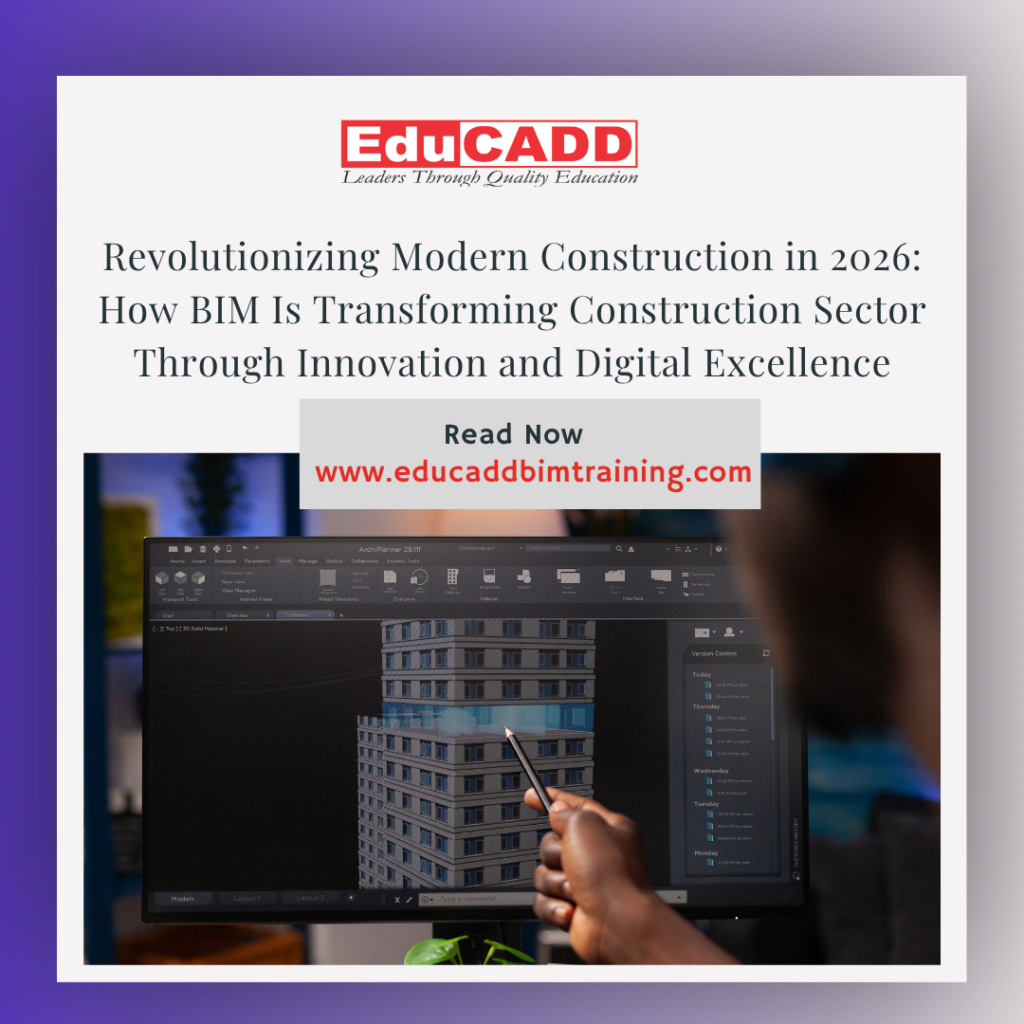
Building Information Modeling has emerged as one of the most powerful technologies driving this change. BIM creates a centralized digital environment where project stakeholders collaborate using accurate and real-time information. Instead of relying on disconnected drawings and spreadsheets, teams work with intelligent models that support planning, design, construction, and facility management. Consequently, BIM is helping organizations deliver projects faster, reduce costs, improve quality, and achieve greater sustainability. Its impact extends across every stage of the project lifecycle, making it a critical component of modern construction success.
1. Understanding BIM as the Foundation of Digital Construction
Building Information Modeling represents a major shift from traditional project workflows toward intelligent digital construction practices. Unlike conventional drafting methods, BIM integrates geometry, project information, specifications, and lifecycle data within a single digital model.
The importance of understanding how BIM is transforming construction sector begins with recognizing BIM as a complete project management ecosystem rather than simply a design tool. Every stakeholder can access accurate information from a centralized source.
As a result, project communication becomes more transparent and efficient throughout the construction lifecycle.
2. Improving Collaboration Between Project Teams
Construction projects involve multiple disciplines, including architecture, structural engineering, MEP systems, project management, and contracting teams. Coordinating these groups effectively often presents significant challenges.
The growing significance of how BIM is transforming construction sector lies in its ability to connect all project participants through a shared digital platform. Team members work from the same updated information instead of separate documents.
This collaborative environment minimizes misunderstandings and improves overall project performance.
3. Enhancing Design Accuracy and Coordination
Design coordination has always been a critical aspect of successful construction projects. Even small design errors can create major issues during construction and lead to costly delays.
The value of how BIM is transforming construction sector includes improving design accuracy through intelligent modeling and automated coordination processes. Designers can detect potential conflicts during project development.
Consequently, teams can resolve issues before construction activities begin.
4. Reducing Rework and Construction Delays
Construction rework remains one of the industry’s most expensive challenges. Design clashes, communication breakdowns, and inaccurate documentation frequently result in costly corrections.
The relevance of how BIM is transforming construction sector becomes clear when BIM technologies identify problems before they reach the construction site. Clash detection tools enable proactive conflict resolution.
This capability reduces delays, improves productivity, and lowers project costs significantly.
5. Delivering Better Project Visualization
Traditional 2D drawings often make it difficult for stakeholders to fully understand complex construction projects. BIM solves this challenge through advanced visualization capabilities.
The importance of how BIM is transforming construction sector includes providing realistic 3D representations that help stakeholders visualize projects before construction begins.
Better visualization supports faster approvals, improved communication, and stronger decision-making processes.
6. Supporting Accurate Project Planning and Scheduling
Project planning plays a crucial role in determining construction success. Delays often occur when teams struggle with scheduling conflicts or resource allocation challenges.
The growing impact of how BIM is transforming construction sector includes integrating scheduling data into project models. This approach enables teams to simulate construction sequences and identify potential risks.
Project managers can therefore optimize workflows and improve schedule reliability.
7. Improving Cost Estimation and Budget Management
Accurate cost estimation remains essential for successful project delivery. Traditional quantity takeoffs often require extensive manual effort and may introduce errors.
The significance of how BIM is transforming construction sector includes automating quantity calculations and improving cost forecasting through intelligent project data.
Key benefits include:
- Faster and more accurate quantity takeoffs
- Improved budget forecasting and financial control
These advantages help organizations manage resources more effectively.
8. Increasing Productivity Through Automation
Automation is becoming a defining characteristic of modern construction workflows. BIM technologies streamline repetitive processes and improve operational efficiency.
The value of how BIM is transforming construction sector includes automating documentation, reporting, scheduling updates, and model coordination activities.
This allows professionals to focus on strategic tasks rather than repetitive administrative work.
9. Promoting Sustainable Construction Practices
Sustainability has become a major focus across the global construction industry. Organizations seek innovative ways to reduce environmental impact while improving operational efficiency.
The importance of how BIM is transforming construction sector extends to sustainable construction because BIM supports energy analysis, material optimization, and environmental performance assessments.
These capabilities help project teams design and construct greener buildings.
10. Enhancing Infrastructure Development Projects
Infrastructure projects such as highways, airports, railways, bridges, and smart cities involve significant complexity and coordination requirements.
The growing significance of how BIM is transforming construction sector reflects BIM’s ability to manage large-scale infrastructure projects involving numerous stakeholders and disciplines.
This capability improves project coordination and enhances infrastructure delivery outcomes.
11. Supporting Facility Management and Building Operations
The value of a construction project extends beyond completion. Building owners require accurate information to manage operations, maintenance, and future renovations effectively.
The relevance of how BIM is transforming construction sector includes providing comprehensive digital information that supports facility management throughout a building’s lifecycle.
This improves operational efficiency and long-term asset performance.
12. Creating New Career Opportunities
The rapid adoption of BIM technologies has generated strong demand for skilled professionals across the construction industry. New job roles continue emerging as organizations expand their digital capabilities.
The importance of how BIM is transforming construction sector includes creating opportunities for BIM modelers, coordinators, managers, consultants, and digital construction specialists.
Professionals with BIM expertise often enjoy strong career growth and competitive salaries.
13. Accelerating Digital Transformation Across the Industry
Construction companies worldwide are investing heavily in digital transformation initiatives. Organizations that embrace technology often achieve stronger project outcomes and operational performance.
The growing impact of how BIM is transforming construction sector includes enabling cloud collaboration, integrated workflows, and data-driven decision-making.
Benefits include:
- Improved project transparency and accountability
- Faster access to real-time project information
These capabilities strengthen organizational competitiveness and innovation.
14. Future Innovations Powered by BIM
The future of construction will increasingly depend on technologies such as artificial intelligence, digital twins, robotics, and smart infrastructure systems. BIM serves as the foundation for many of these innovations.
The significance of BIM continues growing as emerging technologies integrate with intelligent construction workflows. Organizations are already combining BIM with advanced digital solutions to improve project outcomes.
These innovations will further transform the way projects are designed, constructed, and managed.
Conclusion
The construction industry is entering a new era driven by digital innovation, intelligent workflows, and advanced project management technologies. BIM has become one of the most influential forces behind this transformation. It improves collaboration, enhances design quality, reduces project risks, supports sustainability, and increases operational efficiency across every stage of the project lifecycle.
Understanding how BIM is transforming construction sector helps professionals and organizations recognize the immense value of digital construction technologies. BIM is no longer just an optional enhancement; it has become a strategic necessity for successful project delivery in today’s competitive environment.
As construction organizations continue investing in automation, smart infrastructure, and digital transformation, how BIM is transforming construction sector will remain one of the most important topics shaping the future of the industry. Companies that embrace BIM today will be better positioned to deliver smarter, faster, and more successful projects tomorrow.