
The construction industry is evolving at a fast pace, and digital technologies are transforming how projects are planned and executed. Building Information Modeling (BIM) has become a core skill for engineers, architects, and construction professionals. However, learning BIM through theory alone is no longer enough. Today, employers expect candidates to have hands-on experience. That is why choosing a BIM real project course has become essential for building a successful career.
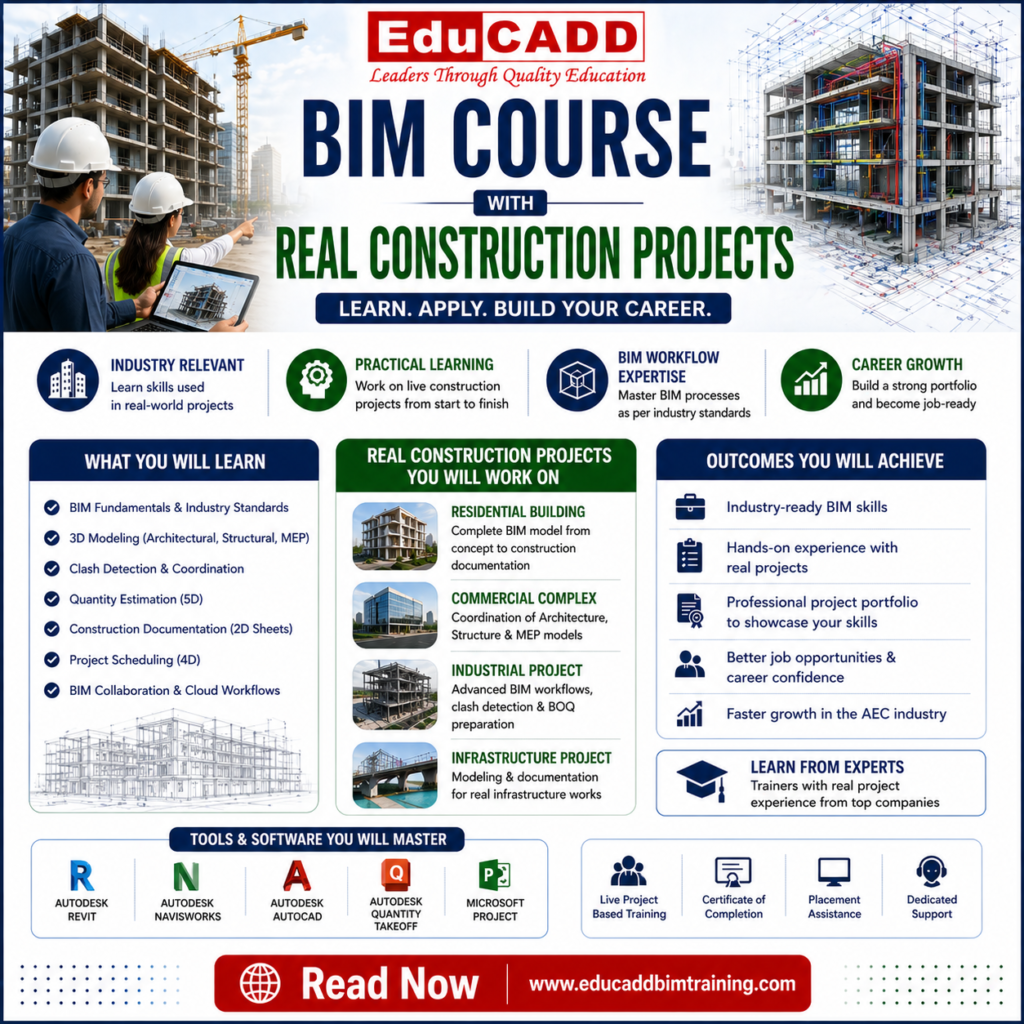
A course that includes real construction projects helps learners understand actual industry workflows. It allows students to apply their knowledge in practical situations. As a result, they gain confidence and develop job-ready skills. In this blog, we will explore the value of a BIM real project course and how it can shape your future in the construction industry.
1. Understanding BIM Beyond Theory
BIM is more than just software. It is a process that involves planning, designing, and managing construction projects using digital models. While theoretical knowledge provides a foundation, practical application is what makes learning complete.
A BIM real project course helps students understand how concepts are applied in real situations. This approach improves clarity and ensures better learning outcomes.
2. Importance of Real-World Exposure
Real-world exposure is crucial for mastering BIM skills. When students work on actual projects, they experience real challenges and learn how to solve them.
This exposure helps them understand project requirements, deadlines, and coordination. A BIM course with real construction projects ensures that students are prepared for real job roles.
3. Key Features of a Practical BIM Course
A practical BIM course includes several important elements that enhance learning.
- Real construction project assignments
- Industry-relevant case studies
These features make the learning process more effective. They also ensure that students gain valuable experience through a BIM course with real construction projects.
4. Learning Project Workflows
Understanding project workflows is essential for BIM professionals. Real projects involve multiple stages such as design, coordination, and execution.
A BIM course with real construction projects teaches students how to manage these stages efficiently. It also helps them understand the role of each team in the project.
5. Hands-On Experience with BIM Software
Practical training improves software skills significantly. Students learn how to use tools like Revit and Navisworks in real scenarios.
Instead of just learning commands, they understand how to apply them in projects. This hands-on experience is a major benefit of a BIM course with real construction projects.
6. Developing Problem-Solving Skills
Construction projects often involve unexpected challenges. Students must learn how to identify and resolve issues quickly.
A BIM course with real construction projects helps learners develop strong problem-solving skills. These skills are highly valued in the industry.
7. Enhancing Team Collaboration
BIM projects require collaboration between different teams. Students must learn how to communicate and work effectively with others.
Working on real projects helps them understand teamwork and coordination. This makes collaboration an important part of a BIM course with real construction projects.
8. Building a Professional Portfolio
A strong portfolio is essential for job applications. Real project work adds significant value to a student’s portfolio.
A BIM course with real construction projects allows students to showcase their skills and experience. This increases their chances of getting hired.
9. Improving Job Readiness
Employers prefer candidates who can start working immediately. Practical experience makes students job-ready from day one.
A BIM course with real construction projects prepares students for industry expectations. It reduces the need for additional training after hiring.
10. Advantages of Real Project Learning
Learning through real projects offers several benefits.
- Better understanding of industry practices
- Increased confidence in handling tasks
These advantages make a BIM course with real construction projects more effective than traditional training methods.
11. Overcoming Learning Challenges
Students may face difficulties when working on real projects. However, these challenges help them grow and improve.
With proper guidance, they can overcome these obstacles. A BIM course with real construction projects provides the support needed for continuous learning.
12. Career Opportunities After Practical Training
Students with practical experience have better career opportunities. They can apply for roles such as BIM Modeler, Engineer, or Coordinator.
Employers value candidates who understand real workflows. This makes a BIM course with real construction projects highly beneficial for career growth.
13. Future Scope of BIM Careers
The demand for BIM professionals is increasing as more companies adopt digital technologies. Practical skills will play a key role in future job opportunities.
A BIM course with real construction projects ensures that students stay relevant in the industry. It prepares them for future advancements.
14. Choosing the Right BIM Course
Selecting the right course is important for success. Students should look for programs that offer real project exposure and experienced trainers.
They should also consider placement support and industry connections. These factors help in choosing the best BIM course with real construction projects.
Conclusion
In today’s competitive job market, practical knowledge is essential for success. A BIM real project course provides the perfect combination of theory and practice. It helps students develop technical skills, problem-solving abilities, and confidence.
As the construction industry continues to evolve, professionals with hands-on experience will have a strong advantage. By choosing a course that includes real projects, you can build a successful and rewarding career in BIM. Investing in a BIM course with real construction projects is a smart step toward achieving your career goals.