
The construction industry is shifting toward smarter and more efficient digital workflows. Traditional drafting methods are no longer enough to meet modern project demands. Today, Building Information Modeling (BIM) has become essential for designing, visualizing, and managing construction projects. Because of this shift, many students and freshers are eager to learn BIM Modeling for Beginners to build a strong foundation in the industry.
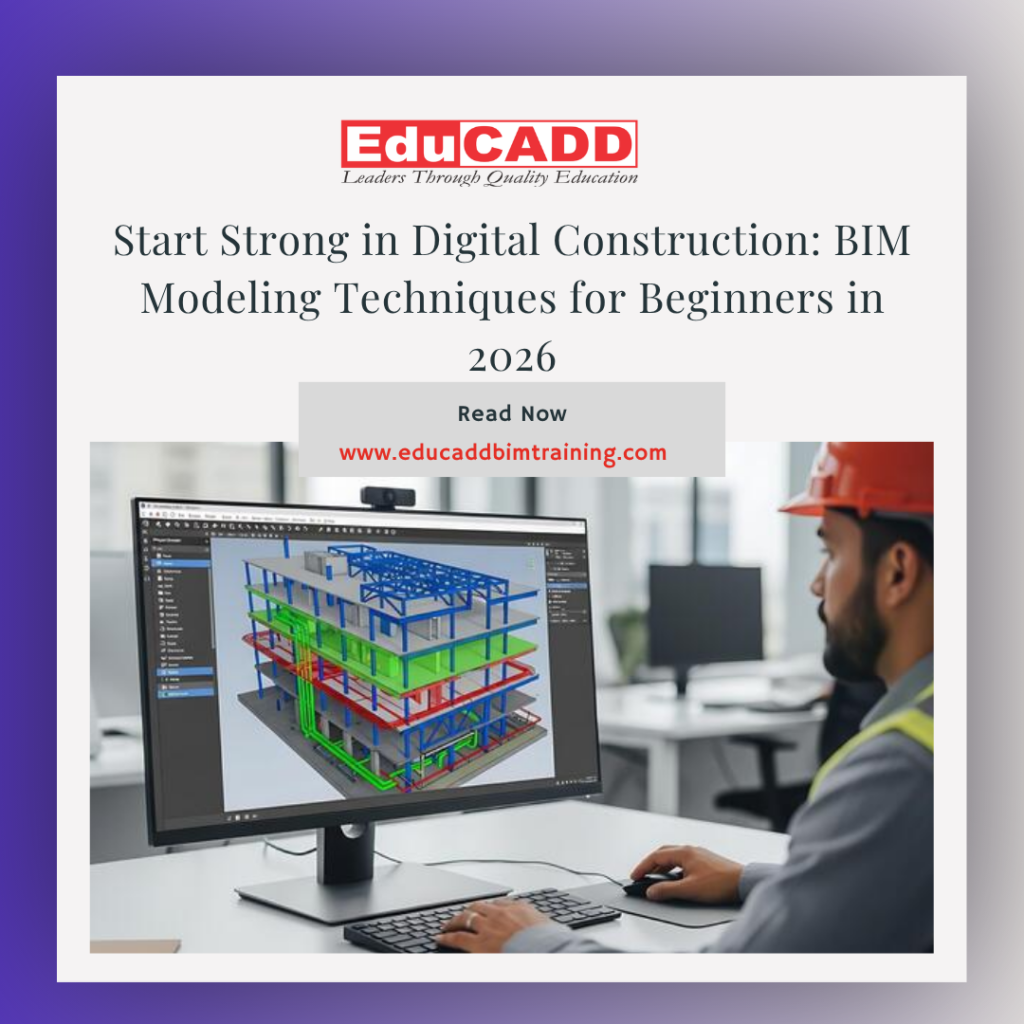
BIM modeling is not just about creating 3D designs. It involves understanding project data, coordination, and real-time updates across multiple disciplines. Beginners must learn the right techniques to create accurate and efficient models. Tools like Autodesk Revit and AutoCAD play a key role in this learning process. In this blog, we will explore BIM modeling techniques for beginners, including essential skills, tools, and best practices.
1. Understanding BIM Modeling Basics
BIM modeling is the process of creating intelligent 3D models that include detailed project information.
It combines design, data, and collaboration. Understanding this is the first step in BIM modeling techniques for beginners.
2. Importance of BIM in Construction
BIM improves accuracy, reduces errors, and enhances project coordination.
It allows better decision-making and planning. This highlights the importance of BIM modeling techniques.
3. Choosing the Right BIM Software
Beginners should start with popular tools like Autodesk Revit and AutoCAD.
These tools provide a strong foundation. They are essential for learning BIM modeling techniques for beginners.
4. Understanding Project Requirements
Before modeling, it is important to understand project requirements and design specifications.
This helps create accurate models. It is a key step in BIM modeling techniques for beginners.
5. Basic Modeling Techniques
Beginners should focus on creating simple elements such as walls, floors, and columns.
- Start with basic components
- Gradually move to complex models
These techniques are part of BIM modeling techniques.
6. Parametric Modeling Concepts
Parametric modeling allows elements to update automatically when changes are made.
This improves efficiency and accuracy. It is an important concept in BIM modeling techniques for beginners.
7. Importance of Accuracy and Detail
Accuracy is critical in BIM modeling. Even small errors can affect the entire project.
Attention to detail is essential in BIM modeling techniques for beginners.
8. Layering and Organization
Proper organization of model elements helps manage complex projects.
Using layers and categories improves workflow. This is part of BIM modeling techniques for beginners.
9. Collaboration in BIM Modeling
BIM involves teamwork across different disciplines.
- Communicate effectively with team members
- Coordinate with architects and engineers
These practices enhance BIM modeling techniques.
10. Clash Detection Basics
Beginners should understand basic clash detection to identify conflicts in models.
This helps avoid errors during construction. It supports BIM modeling techniques.
11. Importance of Practice
Regular practice helps beginners improve their modeling skills.
Working on real projects builds confidence. This strengthens BIM modeling techniques.
12. Common Challenges for Beginners
Beginners may find BIM tools complex and challenging at first.
However, consistent learning can overcome these challenges. This is part of BIM modeling techniques.
13. Career Opportunities After Learning BIM
After learning BIM modeling, beginners can work as BIM Modelers, CAD Technicians, and Junior Engineers.
The demand for these roles is increasing. This highlights BIM modeling techniques.
14. Tips to Master BIM Modeling
Beginners should stay updated with industry trends and continuously improve their skills.
Learning advanced tools and techniques will help career growth. These tips support BIM modeling techniques.
Conclusion
BIM Modeling for Beginners are essential for building a successful career in the construction industry. They provide the foundation for understanding modern construction workflows and digital tools.
With the right training, practice, and dedication, beginners can quickly develop strong BIM skills. Although the learning process may seem challenging at first, consistent effort leads to success.
As the industry continues to adopt BIM technologies, the demand for skilled professionals will increase. By focusing on BIM Modeling, you can create a stable, rewarding, and future-ready career in the digital construction field.