
Introduction
Modern buildings are no longer just physical structures. They are becoming intelligent systems that require continuous monitoring, maintenance, and optimization. In the construction and infrastructure sector of India, facility management has become a critical phase after project completion. However, traditional facility management methods often rely on paper records, disconnected systems, and manual tracking. These outdated methods create inefficiencies, increase operational costs, and reduce building performance over time. To solve these challenges, the industry is rapidly adopting digital technologies. One of the most powerful solutions is BIM for facility management course, which equips professionals with advanced skills to manage buildings efficiently using digital models.
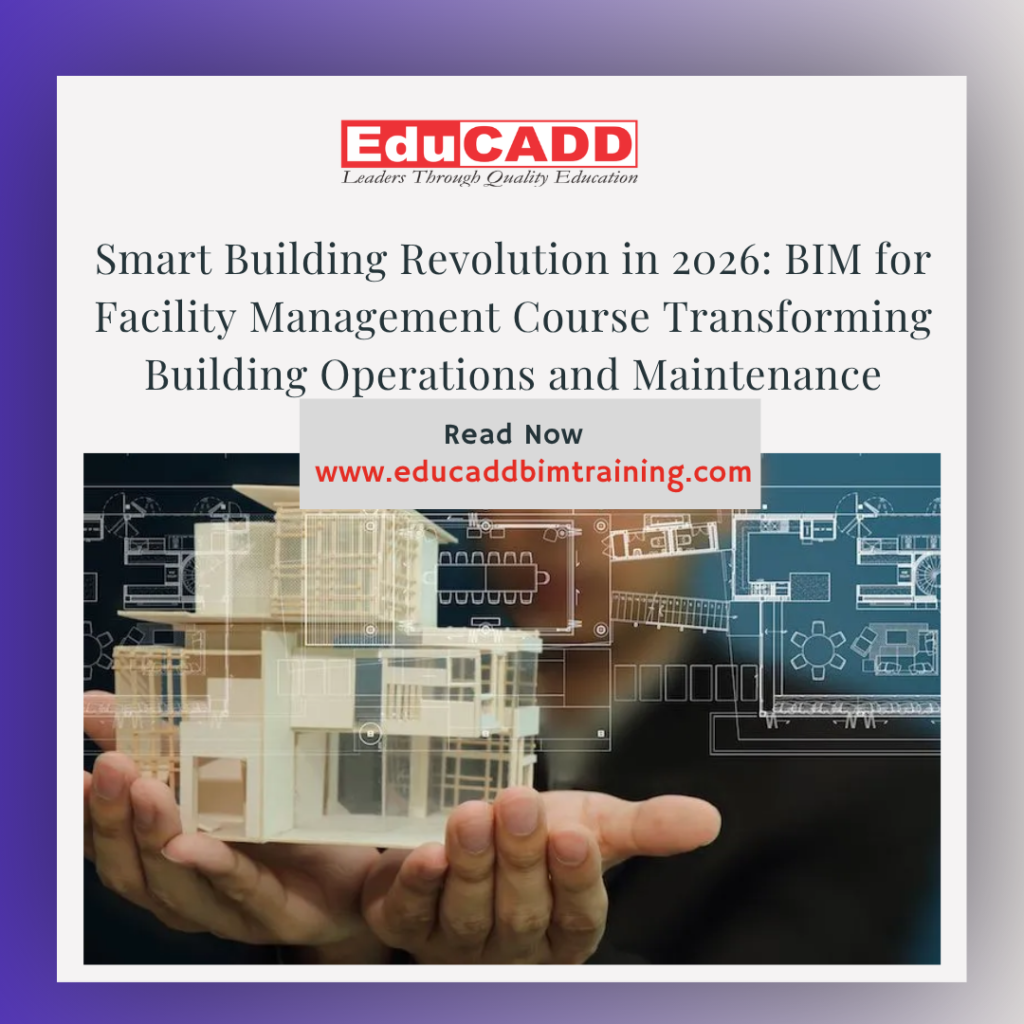
Building Information Modeling connects construction data with real-time facility operations. It creates a “digital twin” of the building that supports maintenance, asset tracking, and lifecycle management. Advanced platforms like Autodesk Revit and Navisworks help facility managers access accurate building information instantly. This blog explains how BIM is transforming facility management and why training in this field is essential.
1. Understanding BIM in Facility Management
BIM in facility management involves using digital building models to manage operations, maintenance, and asset information after construction is completed. It shifts facility management from manual processes to data-driven workflows.
Facility managers can access real-time building data, including equipment details, maintenance schedules, and system performance.
The BIM for facility management course teaches professionals how to use BIM models for building operations, asset tracking, and lifecycle planning.
It also helps bridge the gap between construction teams and operations teams, ensuring smooth information transfer.
2. Importance of Facility Management in Modern Buildings
Facility management ensures that buildings operate efficiently, safely, and cost-effectively throughout their lifecycle.
It includes maintenance, energy management, security, and space optimization.
Poor facility management can lead to high operational costs and reduced building lifespan.
Efficient management improves occupant comfort and overall building performance.
3. Role of BIM in Building Operations
BIM provides a digital representation of all building systems, including mechanical, electrical, and structural components.
Facility managers can access detailed information about every asset in the building.
Additionally:
- Track maintenance history and schedules
- Improve decision-making with real-time data
This makes building operations more efficient and organized.
4. Digital Twin Technology in Facility Management
A digital twin is a virtual replica of a physical building. BIM acts as the foundation for creating digital twins.
It allows facility managers to simulate building performance in real time.
This helps in predicting system failures and optimizing maintenance schedules.
Digital twins improve long-term building efficiency and reduce operational risks.
5. Asset Management Using BIM
BIM simplifies asset management by storing all building asset information in a centralized model.
Each asset has detailed data such as installation date, specifications, and maintenance history.
This reduces manual record-keeping and improves accuracy.
It also helps in tracking asset lifecycle and replacement planning.
6. Maintenance Planning and Scheduling
Maintenance becomes more efficient with BIM-based systems. Facility managers can schedule preventive maintenance based on real data.
This reduces unexpected breakdowns and repair costs.
For example:
- HVAC systems can be monitored for performance issues
- Electrical systems can be inspected at regular intervals
This ensures smooth building operations and reduces downtime.
7. Energy Efficiency and Sustainability
BIM helps facility managers monitor and optimize energy consumption.
Buildings can be analyzed for heating, cooling, and electricity usage patterns.
This leads to better energy-saving strategies.
Sustainable operations also reduce environmental impact and operational costs.
8. Space Management and Utilization
Efficient space management is essential in commercial and residential buildings.
BIM helps analyze how spaces are used and identify underutilized areas.
This improves space planning and allocation.
Better space utilization increases productivity and tenant satisfaction.
9. Integration with Advanced BIM Tools
Facility management relies on advanced BIM tools for data access and visualization.
Autodesk Revit allows detailed building modeling and data integration.
These tools help facility managers access real-time information about building systems.
Integration ensures better coordination between construction and operations teams.
10. Improved Communication Between Stakeholders
BIM improves communication between building owners, facility managers, and maintenance teams.
All stakeholders can access the same updated model.
This reduces miscommunication and improves decision-making.
It also ensures transparency in building operations.
11. Cost Reduction in Facility Management
BIM helps reduce operational costs by improving efficiency and preventing unnecessary maintenance.
Predictive maintenance reduces repair expenses.
Energy optimization also lowers utility costs.
Overall, BIM improves financial performance in facility operations.
12. Safety and Risk Management
Safety is a major concern in facility management. BIM helps identify risks in building systems early.
Facility managers can simulate emergency scenarios.
This improves preparedness for fire safety, evacuation, and system failures.
It also ensures compliance with safety regulations.
13. Career Opportunities in BIM Facility Management
The demand for professionals skilled in digital facility management is increasing rapidly.
Learning BIM for facility management course opens opportunities in building operations, maintenance planning, and asset management.
It is highly valued in real estate, commercial buildings, and infrastructure sectors.
Professionals with BIM skills have strong career growth and global job opportunities.
14. Future Scope of BIM in Facility Management
The future of facility management is fully digital. AI, IoT, and cloud technologies will further enhance BIM capabilities.
Buildings will become smarter and more automated.
This makes BIM for facility management course an essential skill for future professionals.
It will redefine how buildings are operated and maintained globally.
Conclusion
Facility management is becoming a highly technical and data-driven field. BIM is transforming how buildings are maintained, optimized, and managed throughout their lifecycle.
Understanding BIM for facility management course is essential for professionals who want to build a successful career in modern building operations. It improves efficiency, reduces costs, and enhances building performance.
As infrastructure continues to grow in India, the demand for skilled BIM facility managers will continue to rise. Professionals who master BIM for facility management course will play a key role in shaping smarter, more efficient, and sustainable building operations in the future.