
The construction and design industry is evolving rapidly, and technology plays a major role in shaping career opportunities. Among the most discussed topics today is BIM AutoCAD Career Choice for students and professionals entering the field. Both BIM (Building Information Modeling) and AutoCAD have strong positions in the industry, yet they serve different purposes and offer different career paths. Understanding their differences is essential before choosing the right direction.
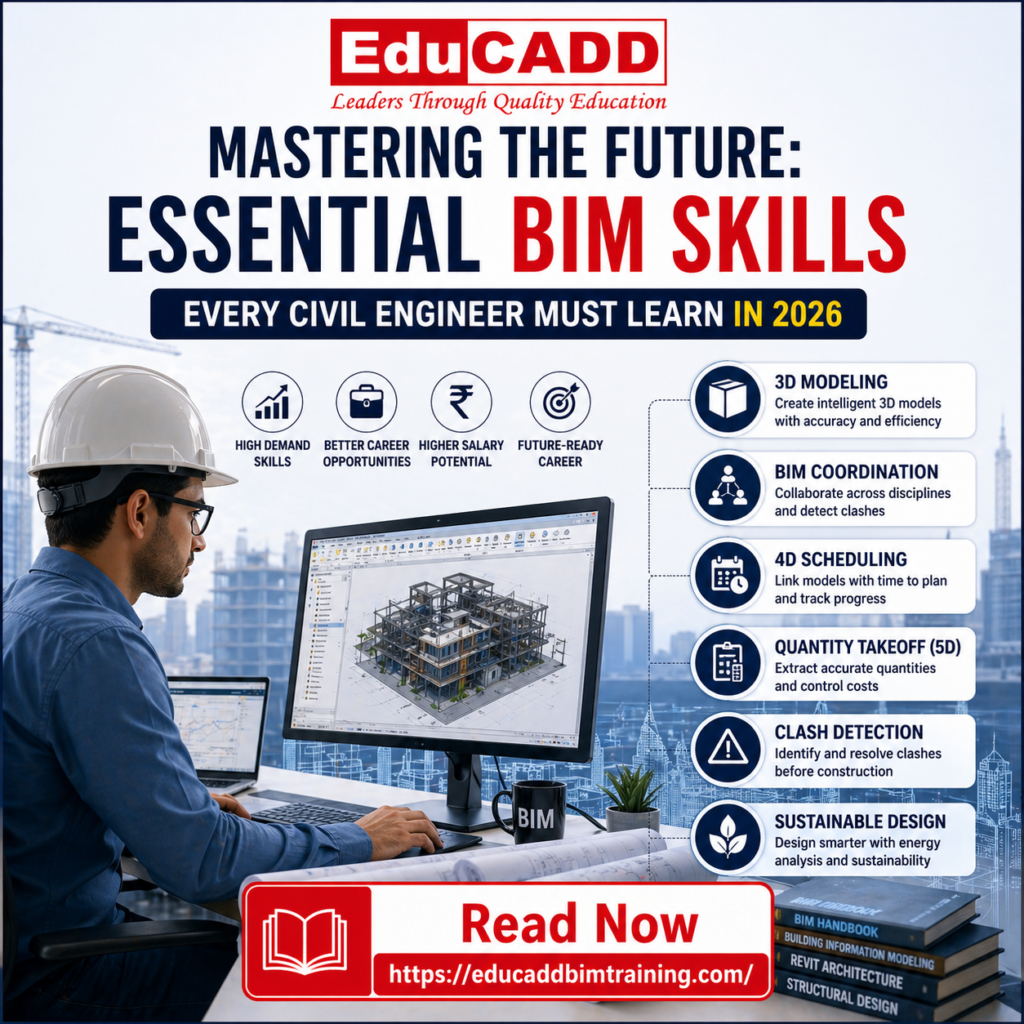
AutoCAD has been a trusted tool for decades, mainly used for 2D drafting and basic 3D designs. On the other hand, BIM represents a modern approach that integrates design, data, and project management into a single system. As industries move toward digital transformation, many learners wonder about BIM AutoCAD Career Choice in terms of growth, salary, and global demand. This blog explores both options in detail to help you make an informed decision.
1. Understanding AutoCAD as a Career Option
AutoCAD is one of the most widely used drafting tools in engineering and architecture. It allows professionals to create precise 2D drawings and basic 3D models. For beginners, AutoCAD is often the first step into the design world because of its simplicity and ease of learning.
Many industries still rely on AutoCAD for creating layouts, floor plans, and technical drawings. It offers a solid foundation for understanding design principles. However, when discussing BIM vs AutoCAD which is better career, it is important to note that AutoCAD mainly focuses on drafting rather than complete project integration.
2. Understanding BIM as a Career Option
BIM is a modern technology that goes beyond traditional drafting. It involves creating intelligent 3D models that include detailed information about every component of a project. These models help manage the entire lifecycle of a building, from design to maintenance.
Professionals working in BIM roles handle coordination, data analysis, and project management. This makes BIM a more advanced and comprehensive approach compared to AutoCAD. Therefore, when evaluating BIM vs AutoCAD which is better career, BIM often stands out due to its broader scope.
3. Key Differences Between BIM and AutoCAD
Understanding the core differences between these two technologies is crucial for career selection. AutoCAD focuses mainly on geometry, while BIM focuses on information and collaboration.
- AutoCAD is used for drafting and documentation
- BIM is used for modeling, analysis, and project management
These differences highlight why the discussion around BIM vs AutoCAD which is better career is important for modern professionals. BIM offers a more integrated approach, while AutoCAD remains a foundational tool.
4. Learning Curve and Accessibility
AutoCAD is easier to learn, especially for beginners. Its interface is simple, and students can quickly start creating drawings. This makes it a good starting point for those new to design.
In contrast, BIM requires more time and effort to master. It involves learning complex tools and understanding workflows. However, the extra effort pays off in the long run. When considering BIM vs AutoCAD which is better career, the learning curve is an important factor to evaluate.
5. Industry Demand and Trends
The demand for BIM professionals is growing rapidly across the globe. Many companies now prefer BIM for large-scale projects because it improves efficiency and reduces errors. Governments are also mandating BIM for public infrastructure projects.
AutoCAD still holds relevance, especially in smaller projects and industries that rely on traditional methods. However, the future clearly leans toward BIM. This shift plays a key role in deciding BIM vs AutoCAD which is better career.
6. Job Roles and Responsibilities
AutoCAD professionals typically work as draftsmen or CAD designers. Their main responsibility is to create technical drawings based on project requirements. These roles are important but limited in scope.
BIM professionals, on the other hand, have diverse roles such as BIM Modeler, BIM Coordinator, and BIM Manager. They handle design, coordination, and project data. This variety of roles strengthens the argument in favor of BIM vs AutoCAD which is better career.
7. Salary Comparison
Salary is a major factor when choosing a career. AutoCAD professionals usually earn a steady income, especially at the entry level. However, salary growth may be slower over time.
BIM professionals often earn higher salaries due to their advanced skills and responsibilities. As they gain experience, their earning potential increases significantly. This financial advantage is a strong point in the debate on BIM vs AutoCAD which is better career.
8. Global Career Opportunities
AutoCAD skills are useful worldwide, but opportunities may be limited to drafting roles. These roles are available in many industries but may not offer significant growth.
BIM professionals have access to global opportunities, especially in countries with large infrastructure projects. This international demand makes BIM a more attractive option. Therefore, global exposure is an important aspect of BIM vs AutoCAD which is better career.
9. Future Growth and Technology
The construction industry is moving toward digitalization, and BIM is at the center of this transformation. Technologies like Artificial Intelligence and Virtual Reality are being integrated with BIM to improve project outcomes.
AutoCAD continues to evolve but remains focused on drafting. Its growth potential is relatively limited compared to BIM. This difference highlights the future-focused nature of BIM vs AutoCAD which is better career.
10. Practical Application in Projects
AutoCAD is mainly used during the design phase to create drawings. It plays a crucial role in documentation but does not cover the entire project lifecycle.
BIM is used throughout the project, from planning to maintenance. It allows teams to collaborate and make informed decisions. This practical advantage makes BIM a strong contender in BIM vs AutoCAD which is better career.
11. Advantages of Choosing AutoCAD
AutoCAD offers several benefits, especially for beginners. It is easy to learn and widely used across industries. It provides a strong foundation in design and drafting.
- Quick learning and faster entry into the job market
- Useful for small-scale projects and basic designs
Despite these advantages, AutoCAD may not offer the same level of growth as BIM. This comparison is essential when analyzing BIM vs AutoCAD which is better career.
12. Advantages of Choosing BIM
BIM offers advanced features and better career growth opportunities. It integrates multiple aspects of a project into a single platform, making it highly efficient.
Professionals with BIM skills are in high demand and often receive better job offers. This makes BIM a preferred choice for long-term career growth. These benefits strongly support BIM in the discussion of BIM vs AutoCAD which is better career.
13. Which One Should You Choose?
Choosing between BIM and AutoCAD depends on your career goals. If you want a quick start and basic design knowledge, AutoCAD is a good option. However, if you aim for long-term growth and advanced roles, BIM is the better choice.
Many professionals start with AutoCAD and later transition to BIM. This combination provides a strong skill set. Ultimately, your decision should align with your goals when considering BIM vs AutoCAD which is better career.
14. Career Strategy for Success
To build a successful career, focus on continuous learning and skill development. Start with the basics and gradually move toward advanced technologies like BIM.
Gaining practical experience and working on real projects will improve your skills. Networking with industry professionals can also open new opportunities. These strategies help you succeed regardless of your choice in BIM vs AutoCAD which is better career.
Conclusion
The debate on BIM AutoCAD Career Choice depends on various factors such as goals, skills, and industry trends. AutoCAD provides a strong foundation and quick entry into the job market. However, BIM offers advanced capabilities, higher salaries, and better growth opportunities.
As the industry moves toward digital transformation, BIM is becoming the preferred choice for modern professionals. While AutoCAD remains relevant, its role is gradually shifting toward support functions. Therefore, for those looking to build a future-ready career, BIM stands out as the better option.
In the end, the best approach is to understand both tools and use them strategically. This combination will give you a competitive edge and ensure long-term success in the evolving construction industry.