
The construction industry is moving rapidly toward digital transformation, and Building Information Modeling (BIM) has become a core skill for modern professionals. As demand rises, students and working professionals are exploring different ways to enter this field. One common question they face is BIM Certification vs Diploma and which option offers better career value. Both paths provide opportunities, but they differ in depth, duration, and career impact.
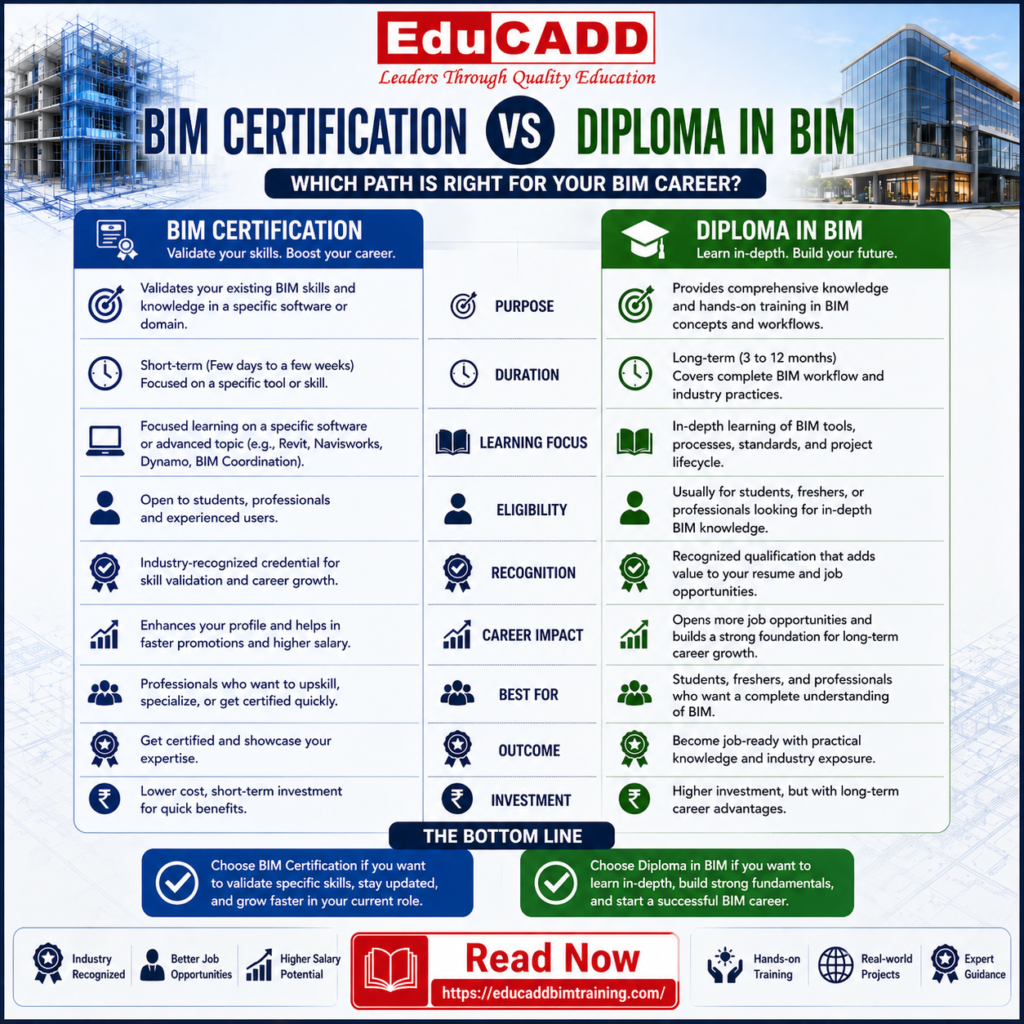
Choosing the right option is important because it affects your skills, job readiness, and long-term growth. A certification program focuses on specific tools and skills, while a diploma provides a more comprehensive understanding of BIM processes. Therefore, understanding BIM certification vs diploma in BIM helps you align your learning with your career goals. In this blog, we will explore both options in detail so you can make an informed decision.
1. Understanding BIM Certification
A BIM certification is a short-term course designed to teach specific skills and tools used in BIM. It usually focuses on software such as Revit, Navisworks, or AutoCAD. These programs are ideal for individuals who want to gain quick knowledge and enter the job market faster.
Certification courses are often practical and skill-based. They emphasize hands-on learning and real-world applications. When comparing BIM Certification vs Diploma, certifications are best suited for those who want quick entry into the industry.
2. Understanding Diploma in BIM
A diploma in BIM is a comprehensive program that covers both theoretical and practical aspects of BIM. It includes detailed training in modeling, coordination, project management, and industry standards.
Diploma programs are longer in duration and provide in-depth knowledge. They prepare students for advanced roles in the industry. This makes the diploma option stronger when evaluating BIM certification vs diploma in BIM for long-term career growth.
3. Key Differences Between Certification and Diploma
The main difference lies in the depth and duration of the programs. Certification courses are shorter and focused, while diplomas are more detailed and extensive.
- Certification focuses on specific tools and skills
- Diploma covers complete BIM workflows and concepts
Understanding these differences is essential when deciding BIM Certification vs Diploma.
4. Duration and Learning Approach
Certification courses usually last from a few weeks to a few months. They are designed for quick learning and immediate application.
Diploma programs may take several months to a year. They follow a structured approach that includes theory, practice, and projects. This difference in duration is a key factor in BIM certification vs diploma in BIM.
5. Skills Developed in Certification Programs
Certification programs focus on developing technical skills. Students learn how to use BIM software effectively and create models.
These programs improve practical knowledge and job readiness. However, they may not cover advanced concepts in detail. This limitation is important in understanding BIM certification vs diploma in BIM.
6. Skills Developed in Diploma Programs
Diploma programs provide a broader skill set. They include technical skills, project management, and industry standards.
Students also learn about coordination, data management, and advanced BIM concepts. This comprehensive training makes diplomas a strong option in BIM certification vs diploma in BIM.
7. Career Opportunities After Certification
Certification holders can start their careers in entry-level roles such as BIM Modeler or CAD Designer. These roles focus on creating and editing models.
While these positions offer a good start, growth may depend on additional learning. This is an important consideration in BIM certification vs diploma in BIM.
8. Career Opportunities After Diploma
Diploma holders have access to a wider range of job roles. They can work as BIM Engineers, Coordinators, or even move toward management roles with experience.
This broader scope makes diplomas more suitable for long-term career growth. It also highlights the advantage in BIM certification vs diploma in BIM.
9. Salary Comparison
Salary is a key factor when choosing between certification and diploma. Certification holders may start with moderate salaries, depending on their skills.
Diploma holders often receive better starting salaries due to their comprehensive training. Over time, their earning potential increases further. This comparison is crucial in BIM certification.
10. Industry Demand and Recognition
Both certifications and diplomas are recognized in the industry. However, diplomas often carry more weight because they cover a wider range of topics.
Employers may prefer diploma holders for advanced roles. This preference plays a role in deciding BIM certification vs diploma in BIM.
11. Advantages of BIM Certification
Certification programs offer several benefits, especially for beginners and working professionals.
- Short duration and quick completion
- Cost-effective and flexible learning
These advantages make certifications a popular choice in BIM certification vs diploma in BIM.
12. Advantages of Diploma in BIM
Diploma programs provide in-depth knowledge and better career opportunities. They prepare students for complex roles in the industry.
The structured learning approach ensures a strong foundation. These benefits strengthen the position of diplomas in BIM certification.
13. Challenges in Both Options
Both certification and diploma programs come with challenges. Certification courses may lack depth, which can limit career growth.
Diploma programs require more time and commitment. Students must be ready to invest effort and resources. Understanding these challenges is part of BIM certification.
14. Which One Should You Choose?
Choosing between certification and diploma depends on your career goals. If you want quick entry into the job market, certification is a good option.
If you aim for long-term growth and advanced roles, a diploma is more suitable. Some professionals start with certification and later pursue a diploma. This balanced approach helps in making the right decision in BIM certification vs diploma in BIM.
Conclusion
The comparison of BIM Certification vs Diploma highlights two valuable learning paths in the BIM industry. Certification programs offer quick learning and job entry, while diploma programs provide comprehensive knowledge and better career growth.
Both options have their own advantages and challenges. The right choice depends on your goals, time, and resources. By understanding your priorities and planning your learning journey, you can build a successful career in BIM and take full advantage of the opportunities in this growing field.