
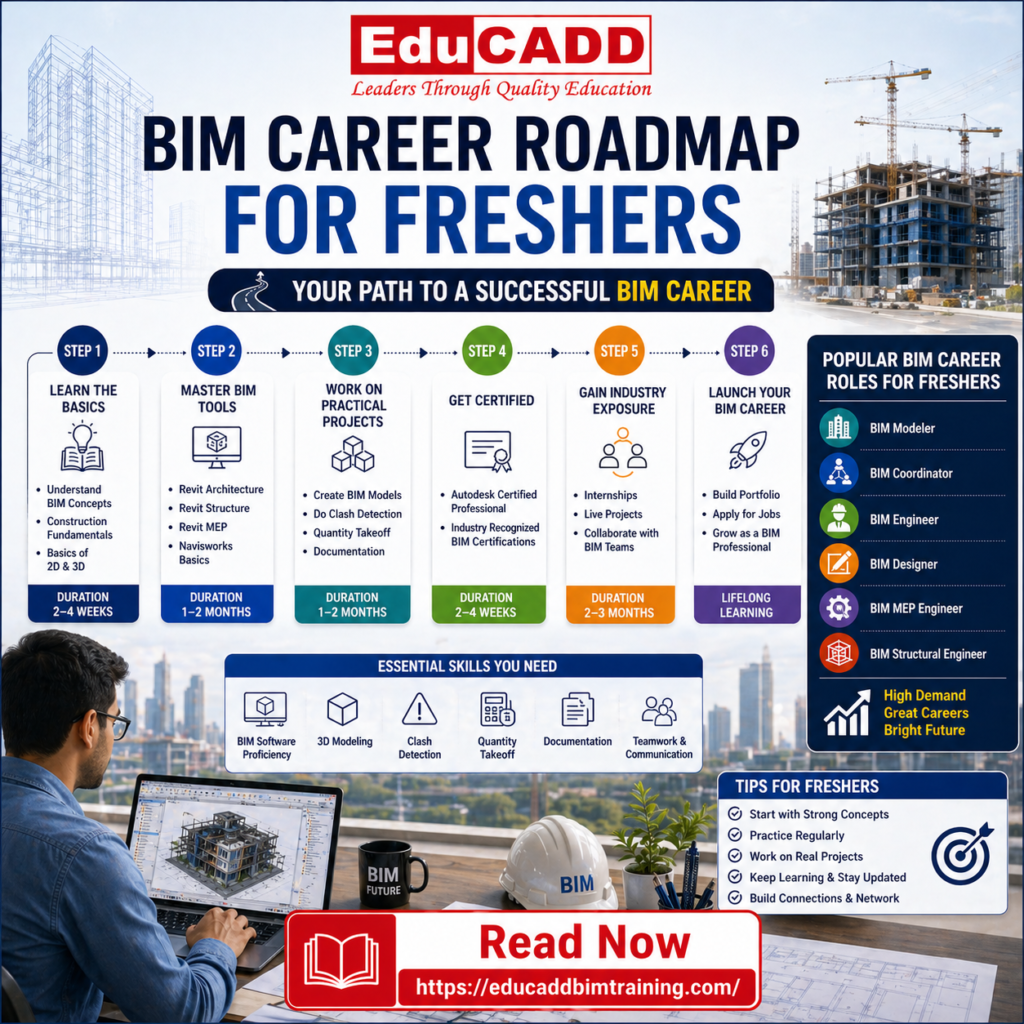
Introduction
The construction industry is changing at a rapid pace, and digital transformation is driving this evolution. Building Information Modeling (BIM) has become one of the most important technologies shaping modern construction and infrastructure development. Today, many students and recent graduates are searching for a clear BIM career roadmap for freshers to enter this promising field. With the right guidance and structured learning, freshers can build a strong and successful career in BIM.
BIM is not just about software; it is a combination of design, data, and collaboration. It allows engineers and designers to work smarter and deliver projects more efficiently. However, entering this field requires a clear understanding of the skills, tools, and steps involved. This blog provides a detailed BIM career roadmap for freshers, helping you navigate your journey from beginner to professional with confidence.
1. Understanding What BIM Really Is
Before starting your journey, you must understand what BIM truly means. BIM is a digital process that creates intelligent 3D models containing detailed information about a building or infrastructure project. These models help teams plan, design, and manage projects effectively.
Unlike traditional drafting methods, BIM integrates multiple disciplines into one platform. This integration improves collaboration and reduces errors. Understanding these basics is the first step in following a proper BIM career roadmap for freshers.
2. Choosing the Right Educational Background
A strong educational foundation is important for building a BIM career. Most professionals in this field come from civil engineering, architecture, or mechanical engineering backgrounds. These fields provide the basic knowledge needed to understand construction concepts.
However, even if you come from a different background, you can still enter BIM through proper training. Many freshers successfully switch careers by following a structured BIM career roadmap for freshers and focusing on skill development.
3. Enrolling in a Professional BIM Course
A professional BIM course is essential for gaining practical knowledge. These courses teach you how to use BIM tools and understand workflows used in real projects. Look for courses that include hands-on training and real-time projects.
- Choose institutes that offer practical exposure
- Ensure placement support is available
Selecting the right course is a crucial step in your BIM career roadmap for freshers because it sets the foundation for your future learning.
4. Learning Essential BIM Software
To succeed in BIM, you must learn industry-standard software tools. These tools help you create and manage digital models efficiently. Some of the most important tools include Revit, Navisworks, and AutoCAD.
Each software serves a specific purpose, such as modeling, coordination, or drafting. Mastering these tools is a key part of the BIM career roadmap for freshers and increases your job opportunities.
5. Developing Core Technical Skills
Technical skills are the backbone of a BIM career. Freshers must focus on developing strong modeling, drafting, and analysis skills. These abilities help you create accurate and efficient project models.
In addition, understanding construction processes and materials improves your practical knowledge. These skills are essential for building a successful BIM career roadmap for freshers.
6. Building Soft Skills for Collaboration
BIM is a collaborative process that involves working with multiple teams. Therefore, communication and teamwork skills are very important. You must be able to share ideas clearly and understand feedback from others.
Problem-solving and time management skills also play a key role in project success. These soft skills strengthen your overall BIM career roadmap for freshers and make you job-ready.
7. Gaining Hands-On Experience
Practical experience is essential for freshers entering the BIM field. Working on real or simulated projects helps you understand how BIM is applied in the industry. Many training institutes provide project-based learning.
You can also practice by creating your own models and exploring different tools. This hands-on approach improves your confidence and supports your BIM career roadmap for freshers.
8. Creating a Strong Portfolio
A portfolio is your professional identity when applying for jobs. It should showcase your best work, including models, drawings, and project details. A well-structured portfolio attracts employers and increases your chances of getting hired.
Focus on quality rather than quantity. Highlight your skills and understanding of BIM workflows. A strong portfolio is a vital step in your BIM career roadmap for freshers.
9. Earning Certifications
Certifications add value to your profile and demonstrate your expertise. Many software providers offer certification programs that validate your skills.
Employers often prefer candidates with certifications because they prove your knowledge and commitment. Adding certifications strengthens your BIM career roadmap for freshers and improves job prospects.
10. Exploring Entry-Level Job Roles
Freshers can start their careers in roles such as BIM Modeler or Junior BIM Engineer. These roles involve creating models, assisting in coordination, and supporting project teams.
As you gain experience, you can move into advanced roles with more responsibilities. Understanding these roles helps you plan your BIM career roadmap for freshers effectively.
11. Understanding Industry Demand
The demand for BIM professionals is increasing across the globe. Construction companies, design firms, and infrastructure projects are actively hiring BIM experts.
This growing demand ensures job stability and career growth. It also makes BIM a smart choice for freshers looking for long-term opportunities. This trend strongly supports the importance of a BIM career roadmap for freshers.
12. Overcoming Challenges as a Fresher
Starting a new career can be challenging, especially in a technical field like BIM. Freshers may find it difficult to learn complex tools and workflows at first.
- Difficulty in understanding advanced software
- Need for continuous practice and learning
However, consistent effort and proper guidance can help overcome these challenges. Facing these obstacles is part of the BIM career roadmap for freshers.
13. Staying Updated with Industry Trends
The BIM industry is constantly evolving with new technologies such as Artificial Intelligence and Virtual Reality. Staying updated with these trends is important for career growth.
Reading industry blogs, attending webinars, and learning new tools can help you stay ahead. This habit ensures that your BIM career roadmap for freshers remains relevant and future-ready.
14. Planning Long-Term Career Growth
A successful BIM career requires long-term planning. Start with entry-level roles and gradually move toward positions like BIM Coordinator or BIM Manager. Each step requires skill development and experience.
Set clear goals and track your progress regularly. Continuous learning and improvement will help you achieve success. This strategic approach completes your BIM career roadmap for freshers.
Conclusion
The BIM industry offers exciting opportunities for freshers who are ready to learn and grow. Following a structured BIM career roadmap for freshers can help you build a strong foundation and achieve long-term success. From learning software tools to gaining practical experience, every step plays an important role in your journey.
As the construction industry continues to embrace digital transformation, the demand for skilled BIM professionals will only increase. Freshers who invest in the right skills and stay updated with industry trends will have a competitive advantage. With dedication and consistent effort, you can turn your ambitions into a successful BIM career and secure a bright future in this growing field.