
The construction industry is evolving faster than ever, and traditional methods are steadily being replaced by smarter, more efficient digital processes. One of the most powerful transformations shaping this change is Building Information Modeling (BIM). Today, civil engineers are not just expected to design structures—they are expected to create intelligent, data-driven models that improve decision-making across the entire project lifecycle. As infrastructure projects become more complex and deadlines tighter, mastering Essential BIM Civil Skills is no longer optional; it is a necessity.
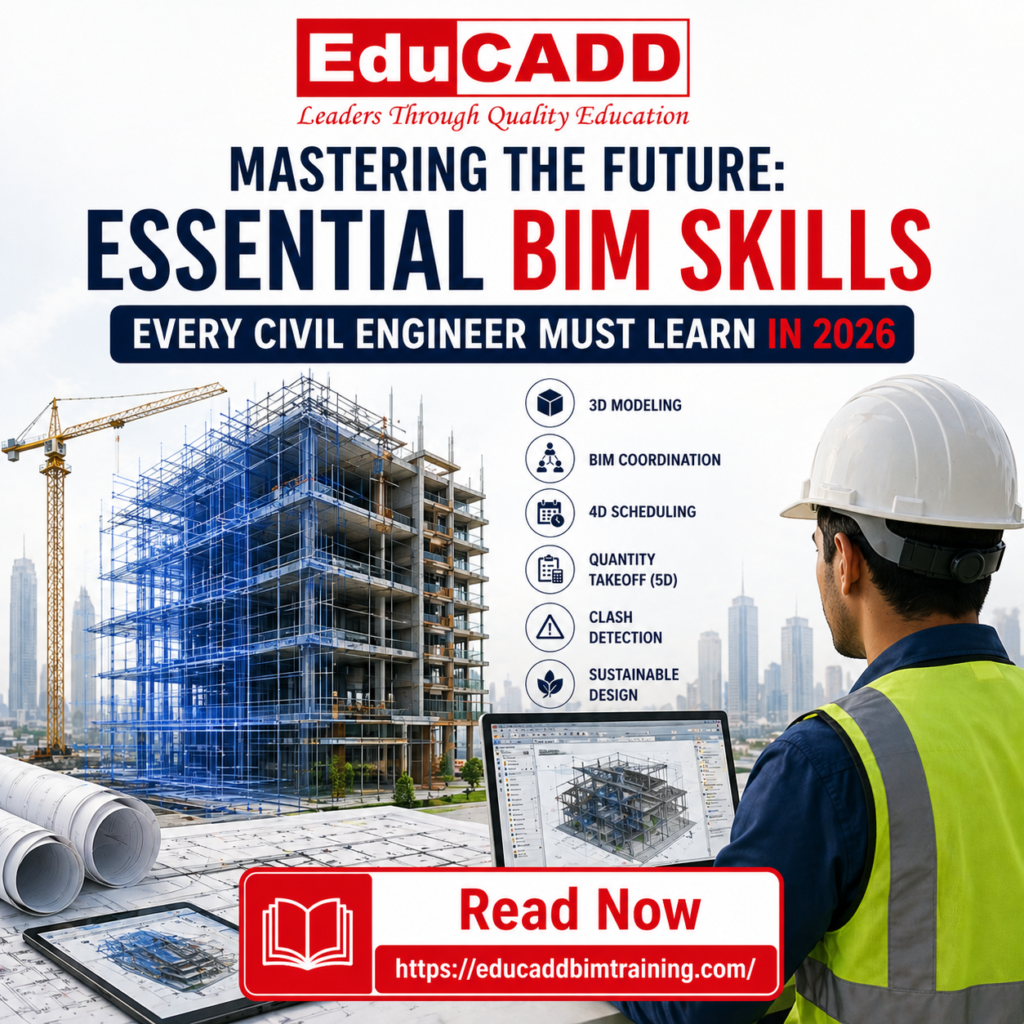
BIM empowers engineers to visualize, simulate, and manage construction projects with unmatched precision. From planning and design to execution and maintenance, it integrates all project stakeholders into a single digital platform. This shift demands a new set of technical, analytical, and collaborative skills. In this blog, we will explore the most important Essential BIM Civil Skills, helping you stay competitive and future-ready in 2026 and beyond.
1. Understanding BIM Fundamentals
Before diving into advanced tools, civil engineers must build a strong foundation in BIM concepts. BIM is not just software; it is a process that involves creating and managing digital representations of physical and functional characteristics of a project. Engineers should understand key principles such as 3D modeling, data integration, lifecycle management, and collaboration workflows.
A clear understanding of BIM levels (Level 0 to Level 3) also helps engineers identify how projects evolve in terms of data sharing and coordination. With this knowledge, engineers can communicate effectively with architects, contractors, and project managers. This foundational knowledge directly supports mastering BIM skills required for civil engineers in real-world scenarios.
2. Proficiency in BIM Software Tools
To succeed in BIM, civil engineers must gain hands-on experience with industry-standard software tools. Applications such as Autodesk Revit, Navisworks, and Civil 3D are widely used for designing and managing construction projects. These tools allow engineers to create detailed models, analyze structures, and detect clashes before construction begins.
Learning software features such as parametric modeling, rendering, and simulation enhances productivity. Engineers who regularly practice using these tools can deliver high-quality outputs within shorter timeframes. As a result, developing these technical abilities strengthens the core Essential BIM Civil Skills.
3. 3D Modeling and Visualization Skills
3D modeling is the backbone of BIM. Civil engineers must develop the ability to create accurate and detailed digital models that represent real-world structures. These models help stakeholders visualize the project before construction begins, reducing misunderstandings and design conflicts.
Strong visualization skills also improve presentations and client communication. When engineers can clearly demonstrate how a structure will look and function, decision-making becomes faster and more effective. These capabilities are essential components of BIM skills required for civil engineers.
4. Clash Detection and Coordination
Clash detection is one of the most valuable aspects of BIM. It involves identifying conflicts between different building systems, such as structural, mechanical, and electrical components. Civil engineers must learn how to use BIM tools to detect and resolve these clashes before construction starts.
- Reduces costly rework and project delays
- Improves coordination among different teams
By mastering clash detection, engineers ensure smoother project execution. This skill plays a major role in strengthening BIM skills required for civil engineers in practical environments.
5. Knowledge of Construction Processes
BIM is closely linked with real-world construction practices. Civil engineers must understand how structures are built, including materials, methods, and sequencing. This knowledge allows them to create models that are practical and buildable.
When engineers combine BIM with construction knowledge, they can simulate project timelines and identify potential challenges. This approach leads to better planning and resource management. It also enhances the effectiveness of BIM skills required for civil engineers in project execution.
6. Data Management and Analysis
BIM is a data-rich process, and managing this data effectively is crucial. Civil engineers must learn how to handle large volumes of information, including design specifications, material data, and project schedules. Proper data management ensures accuracy and consistency across all project stages.
Data analysis skills also help engineers make informed decisions. By analyzing project data, they can identify trends, predict outcomes, and optimize performance. These abilities are key aspects of BIM skills required for civil engineers in modern construction.
7. Collaboration and Communication Skills
BIM promotes a collaborative work environment where multiple stakeholders work together on a shared platform. Civil engineers must develop strong communication skills to coordinate with architects, contractors, and clients.
Effective collaboration reduces misunderstandings and improves project outcomes. Engineers who can clearly share ideas and feedback contribute to a more efficient workflow. This collaborative mindset is a core part of BIM skills required for civil engineers.
8. Understanding of BIM Standards and Protocols
To work effectively in BIM, civil engineers must be familiar with industry standards and protocols. These guidelines ensure consistency and interoperability across different projects and teams. Standards such as ISO 19650 play a crucial role in managing information throughout the project lifecycle.
By following these standards, engineers can maintain data accuracy and improve project coordination. This knowledge strengthens the professional BIM skills required for civil engineers globally.
9. Time and Cost Management (4D & 5D BIM)
Advanced BIM skills include 4D and 5D modeling, which integrate time and cost into the project model. Civil engineers must learn how to link schedules and budgets with 3D models to create a comprehensive project plan.
- Enhances project planning and scheduling
- Helps control costs and avoid budget overruns
These skills enable engineers to monitor project progress in real time. As a result, they become an essential part of BIM skills required for civil engineers.
10. Problem-Solving and Critical Thinking
BIM requires engineers to think critically and solve complex problems. Whether it is resolving design conflicts or optimizing project workflows, engineers must approach challenges with a logical mindset.
Strong problem-solving skills help engineers identify issues early and develop effective solutions. This ability improves project efficiency and reduces risks. It is a vital element of BIM skills required for civil engineers.
11. Integration with Emerging Technologies
BIM is continuously evolving with new technologies such as Artificial Intelligence (AI), Virtual Reality (VR), and Augmented Reality (AR). Civil engineers must stay updated with these advancements to remain relevant in the industry.
Integrating BIM with these technologies enhances project visualization and analysis. This innovation further expands the scope of BIM skills required for civil engineers.
12. Sustainability and Green Building Knowledge
Sustainability is becoming a key focus in construction. Civil engineers must understand how BIM can support green building practices. This includes energy analysis, material optimization, and environmental impact assessment.
By using BIM for sustainable design, engineers can reduce waste and improve resource efficiency. This approach aligns with evolving BIM skills required for civil engineers.
13. Attention to Detail and Accuracy
Precision is essential in BIM. Civil engineers must ensure that every element in the model is accurate and consistent. Even small errors can lead to significant issues during construction.
Attention to detail improves model quality and reliability. This discipline is an important part of BIM skills required for civil engineers.
14. Continuous Learning and Adaptability
The BIM landscape is constantly changing, and civil engineers must be willing to learn and adapt. New tools, technologies, and standards are introduced regularly, making continuous learning essential.
Engineers who stay updated with industry trends can maintain their competitive edge. This mindset completes the set of BIM skills required for civil engineers in today’s competitive world.
Conclusion
BIM is transforming the construction industry, and civil engineers must adapt to this change to remain relevant and successful. The skills discussed in this blog are not just technical requirements—they are essential competencies that define the modern engineer. From mastering software tools to understanding sustainability and collaboration, each skill plays a vital role in shaping a successful BIM career.
As we move into 2026, the demand for professionals with strong Essential BIM Civil Skills will continue to grow. Engineers who invest in learning and developing these skills will enhance their career prospects and contribute to building smarter, more efficient infrastructure.