
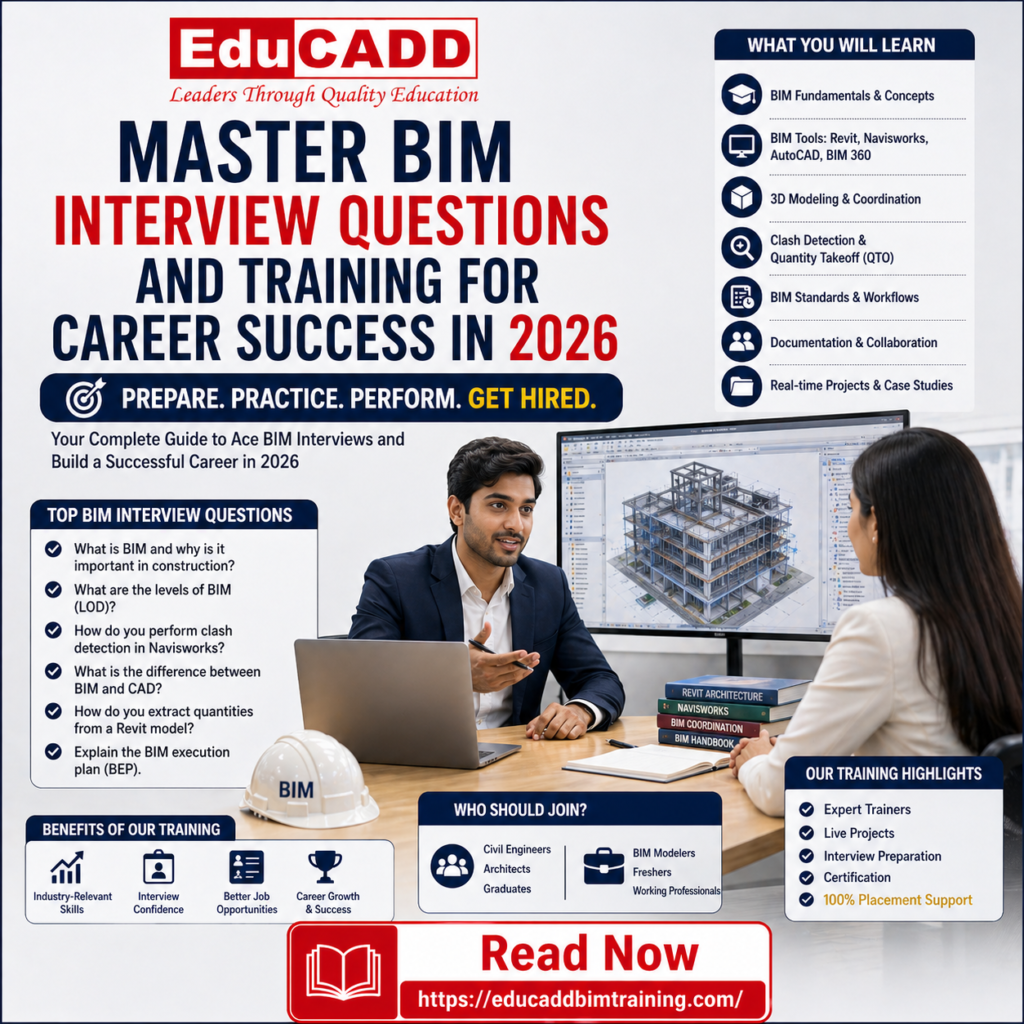
Introduction
The construction industry is rapidly evolving with digital technologies, and Building Information Modeling (BIM) has become a core requirement for modern engineering roles. As companies continue to adopt BIM workflows, the demand for skilled professionals is increasing significantly. This shift has made it essential for students and job seekers to understand BIM interview questions and training to secure high-quality job opportunities. Without proper preparation, even technically skilled candidates may struggle to perform well in interviews.
Preparing for BIM interviews requires a combination of theoretical knowledge, practical skills, and confidence. At the same time, choosing the right training program plays a crucial role in building a strong foundation. This blog provides a detailed guide on BIM interview questions and training, helping you understand what employers expect and how you can prepare effectively for a successful career.
1. Understanding BIM Basics for Interviews
Before attending any interview, candidates must have a clear understanding of BIM fundamentals. Interviewers often begin with basic questions to evaluate your core knowledge. You should be able to explain what BIM is, how it works, and why it is important in construction.
A strong foundation helps you answer questions confidently and accurately. It also shows your readiness for professional roles. Therefore, mastering the basics is the first step in preparing for BIM interview questions and training.
2. Importance of Professional BIM Training
Training plays a key role in preparing candidates for interviews. A good BIM training program provides hands-on experience with real-world projects. It helps you understand workflows, tools, and industry practices.
- Focus on practical project-based learning
- Choose institutes with placement assistance
Proper training not only improves your technical skills but also prepares you for common interview scenarios. This makes training an essential part of BIM interview questions and training preparation.
3. Common BIM Interview Questions
Interviewers often ask a set of standard questions to evaluate your knowledge and skills. These questions test your understanding of BIM concepts, software tools, and workflows.
Some common questions include explaining BIM levels, describing clash detection, and discussing project coordination. Preparing answers to these questions improves your confidence. It also ensures that you are ready for BIM interview questions and training expectations.
4. Software-Based Interview Questions
BIM interviews often include questions related to software tools. Candidates must demonstrate their knowledge of tools like Revit, Navisworks, and AutoCAD. Interviewers may ask about features, commands, and workflows.
You should be ready to explain how you use these tools in projects. Practical knowledge is more important than theoretical understanding. This focus on tools is a key part of BIM interview questions and training.
5. Practical and Scenario-Based Questions
Employers often ask scenario-based questions to test your problem-solving skills. These questions require you to explain how you would handle real project situations.
For example, you may be asked how to resolve clashes or manage project delays. Your answers should show logical thinking and practical knowledge. This approach is an important aspect of BIM interview questions and training.
6. Technical Skills Required for Interviews
Technical skills are essential for clearing BIM interviews. Candidates must have strong modeling, drafting, and coordination skills. These abilities help you perform tasks efficiently and accurately.
In addition, knowledge of construction processes and materials is important. These technical competencies strengthen your preparation for BIM interview questions and training.
7. Soft Skills That Matter in Interviews
Apart from technical skills, soft skills play a crucial role in interviews. Communication, teamwork, and time management are highly valued by employers. You must be able to express your ideas clearly and confidently.
Problem-solving skills also help you handle challenging questions. These soft skills enhance your overall performance in BIM interview questions and training.
8. How to Prepare for BIM Interviews
Preparation is the key to success in any interview. Start by reviewing basic concepts and practicing software tools. Work on sample questions and improve your understanding of workflows.
Create a study plan and dedicate time to each topic. Regular practice builds confidence and improves performance. This preparation strategy is essential for mastering BIM interview questions and training.
9. Role of Portfolio in Interviews
A portfolio is an important part of your interview preparation. It showcases your skills and projects to potential employers. A well-organized portfolio creates a positive impression.
Include your best models, drawings, and project details. Explain your work clearly during the interview. A strong portfolio supports your success in BIM interview questions and training.
10. Certifications and Their Impact
Certifications add value to your profile and improve your credibility. Many companies prefer candidates with recognized BIM certifications. These certifications prove your expertise in specific tools and processes.
They also increase your chances of getting shortlisted for interviews. Adding certifications strengthens your preparation for BIM interview questions and training.
11. Common Mistakes to Avoid
Candidates often make mistakes during interviews that affect their performance. Avoiding these mistakes can improve your chances of success.
- Lack of preparation and practice
- Poor communication and confidence
Being aware of these issues helps you perform better. Avoiding mistakes is an important part of BIM interview questions and training.
12. Understanding Employer Expectations
Employers look for candidates who can contribute to projects effectively. They expect technical knowledge, practical skills, and a positive attitude. Understanding these expectations helps you prepare better.
Focus on demonstrating your skills and willingness to learn. This approach aligns with the goals of BIM interview questions and training.
13. Future Scope After Training
After completing BIM training and clearing interviews, you can explore various career opportunities. Roles such as BIM Modeler, BIM Engineer, and BIM Coordinator are in high demand.
As you gain experience, you can move into senior positions. This growth highlights the importance of BIM interview questions and training in building a successful career.
14. Continuous Learning for Career Growth
The BIM industry is constantly evolving with new technologies. Continuous learning is essential to stay updated and competitive. Attend workshops, learn new tools, and follow industry trends.
This habit helps you improve your skills and advance your career. Continuous learning completes the journey of BIM interview questions and training.
Conclusion
Preparing for BIM interviews requires a combination of knowledge, skills, and confidence. Understanding BIM interview questions and training helps you build a strong foundation and improve your chances of success. From mastering basic concepts to gaining practical experience, every step plays an important role in your preparation.
As the demand for BIM professionals continues to grow, those who invest in proper training and preparation will stand out in the job market. By focusing on both technical and soft skills, you can achieve your career goals and build a successful future in the BIM industry.